

Skin temperature is a crucial physiological parameter that reflects the body's thermoregulatory processes and its interaction with the environment. Skin temperature probes have emerged as indispensable tools in studying the impact of environmental factors on living organisms. As a leading supplier of high - quality skin temperature probes, we are deeply involved in understanding their significance and applications.
The Basics of Skin Temperature and Its Significance
Skin temperature is highly variable and can be influenced by both internal physiological processes and external environmental conditions. On the physiological side, factors such as metabolic rate, blood flow, and hormonal regulation play significant roles. Metabolic processes generate heat, and the blood circulates this heat throughout the body. Hormones can also affect thermoregulation; for example, thyroid hormones increase metabolic rate and heat production.
Externally, environmental factors like ambient temperature, humidity, wind speed, and solar radiation have profound effects on skin temperature. In cold environments, the body tries to conserve heat by reducing blood flow to the skin, which lowers skin temperature. In contrast, in hot environments, the body increases blood flow to the skin to dissipate heat through radiation, conduction, convection, and evaporation.
Monitoring skin temperature allows researchers to understand how an organism copes with these environmental challenges. It provides insights into the physiological mechanisms of thermoregulation, which are essential for the survival and well - being of living organisms.
How Skin Temperature Probes Work
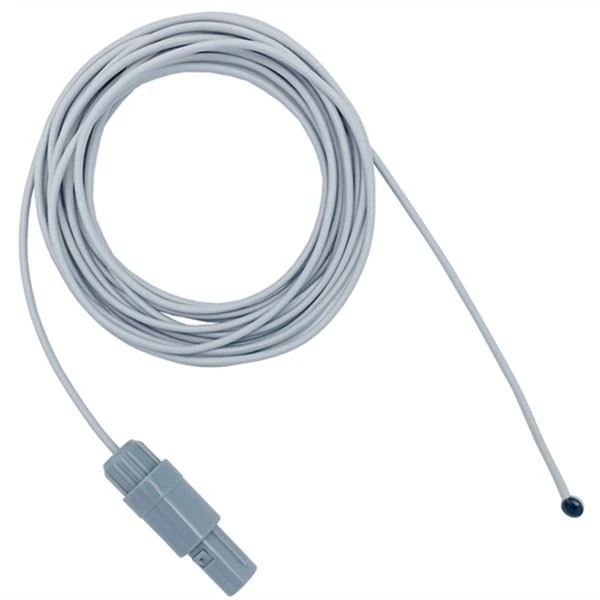
Our skin temperature probes are designed with high - precision sensors. The 2.252K Skin Temperature Probe is a prime example. It uses advanced 2K NTC Thermistor technology. NTC (Negative Temperature Coefficient) thermistors are semiconductor devices whose resistance decreases as the temperature increases.
The probe measures the resistance of the thermistor, and through a pre - calibrated relationship between resistance and temperature, it can accurately determine the skin temperature. These probes are often attached to the skin using adhesives or straps to ensure good contact and accurate readings.
The Temperature Adapter Cable is an important accessory that allows the skin temperature probe to connect to data acquisition systems. It ensures reliable transmission of the temperature data from the probe to the recording device, which may be a computer, a data logger, or a specialized medical monitor.
Studying the Impact of Environmental Factors on Living Organisms Using Skin Temperature Probes
Ambient Temperature
One of the most obvious environmental factors affecting skin temperature is ambient temperature. In a study conducted on a group of volunteers, we used our skin temperature probes to monitor the changes in skin temperature as the ambient temperature was gradually decreased. As the room temperature dropped, the skin temperature of the extremities, such as the hands and feet, decreased significantly. This is because the body constricts blood vessels in the extremities to reduce heat loss.
Conversely, when the ambient temperature was increased, the skin temperature rose, and blood vessels in the skin dilated to increase heat dissipation. By continuously monitoring skin temperature using our probes, researchers can quantify the body's response to different ambient temperatures and understand the limits of thermoregulation.

Humidity
Humidity also plays a crucial role in thermoregulation. High humidity reduces the effectiveness of evaporative cooling, which is the body's main mechanism for heat dissipation in hot environments. When using skin temperature probes in a high - humidity environment, we observed that skin temperature remained higher compared to a low - humidity environment at the same ambient temperature.
This is because sweat evaporation is hindered by the high moisture content in the air. The body has to rely more on other heat - loss mechanisms, such as radiation and convection, which are less efficient. Our skin temperature probes enable researchers to study how organisms adapt to these challenging humidity conditions and the potential health risks associated with high humidity, such as heat exhaustion and heatstroke.
Wind Speed
Wind speed affects heat transfer from the skin to the environment through convection. In windy conditions, the moving air carries heat away from the skin more rapidly, resulting in a lower skin temperature. Our probes have been used in field studies to measure skin temperature changes under different wind speeds.
For example, in a study on outdoor workers, we found that even a moderate increase in wind speed could significantly lower skin temperature, especially in cold environments. This not only affects the comfort of the workers but also has implications for their energy expenditure as the body tries to maintain a stable core temperature.
Solar Radiation
Solar radiation can directly heat the skin, leading to an increase in skin temperature. Our skin temperature probes are sensitive enough to detect small changes in temperature caused by solar radiation. In a study of beachgoers, we monitored the skin temperature of different body parts exposed to the sun.
It was found that areas exposed to direct sunlight, such as the head and shoulders, had a much higher skin temperature compared to shaded areas. These measurements help us understand the potential damage to the skin caused by excessive solar radiation, such as sunburn and skin aging, and also the body's thermoregulatory response to solar heating.
Applications in Different Fields
Medicine and Healthcare
In the medical field, skin temperature probes are used for a variety of purposes. They can help diagnose certain medical conditions, such as peripheral vascular diseases. In patients with poor blood circulation, the skin temperature of the affected extremities is often lower than normal. By using our skin temperature probes, doctors can accurately measure these temperature differences and monitor the progression of the disease.
They are also used in neonatal care to ensure that premature infants are maintained at an optimal temperature. Premature infants have an underdeveloped thermoregulatory system, and monitoring their skin temperature is crucial for their survival and well - being.
Sports Science
Sports scientists use skin temperature probes to understand how athletes' bodies respond to different environmental conditions during training and competition. For example, in endurance sports like marathons, monitoring skin temperature can help coaches and athletes manage heat stress and prevent overheating.
By analyzing the data collected from our probes, athletes can adjust their training strategies and clothing to optimize their performance and reduce the risk of heat - related injuries.
Environmental Science
Environmental scientists use skin temperature probes to study the impact of climate change on living organisms. As global temperatures rise, it is important to understand how different species will adapt to the changing thermal environment. By monitoring the skin temperature of animals in the wild, researchers can assess their ability to cope with heat stress and predict the potential effects of climate change on biodiversity.
Why Choose Our Skin Temperature Probes
Our skin temperature probes are known for their high accuracy and reliability. We use the latest sensor technology and strict quality control measures to ensure that each probe provides consistent and accurate temperature readings. They are also designed for easy use, with comfortable attachments and flexible cables.
Our extensive range of products, including the 2.252K Skin Temperature Probe and the accompanying Temperature Adapter Cable, can meet the diverse needs of researchers and professionals in different fields.
Contact Us for Procurement
If you are interested in purchasing our skin temperature probes or need more information about our products, please feel free to reach out to us. We are committed to providing the best products and services to support your research and applications. Contact us today to start a procurement discussion.
References
- Clarke, P. A., & Finucane, P. M. (1998). Thermoregulation in the neonate. Paediatrics and child health, 3(6), 307 - 310.
- Gonzalez - Alonso, J., Teller, S. J., & Coyle, E. F. (1998). Influence of dehydration on thermoregulatory responses to exercise in the heat. Journal of applied physiology, 85(5), 1525 - 1534.
- Romanovsky, A. A. (2007). Thermoregulation: some concepts have changed. Functional architecture of the thermoregulatory system. American journal of physiology - regulatory, integrative and comparative physiology, 292(1), R37 - R46.


