

In today's technological era, wireless temperature sensors have become indispensable tools in various industries, from healthcare to automotive, and from environmental monitoring to industrial automation. As a leading temperature sensor supplier, I am excited to share with you the inner workings of these remarkable devices.
The Basics of Temperature Sensing
Before delving into the wireless aspect, let's first understand the fundamental principle of temperature sensing. Most temperature sensors operate based on the concept that certain physical properties of materials change with temperature. One of the most common types of temperature sensors is the thermistor, which is a type of resistor whose resistance varies significantly with temperature. There are two main types of thermistors: negative temperature coefficient (NTC) and positive temperature coefficient (PTC). NTC thermistors have a resistance that decreases as the temperature increases, while PTC thermistors have a resistance that increases with temperature.
Another widely used temperature sensor is the thermocouple, which consists of two different metals joined together at one end. When there is a temperature difference between the junction and the other end of the wires, a voltage is generated. This voltage is proportional to the temperature difference, allowing the measurement of temperature.
Wireless Communication in Temperature Sensors
Now that we have a basic understanding of temperature sensing, let's explore how wireless communication is integrated into these sensors. Wireless temperature sensors use various wireless communication protocols to transmit temperature data from the sensor to a receiver or a monitoring system. Some of the most common wireless protocols used in temperature sensors include Wi - Fi, Bluetooth, ZigBee, and LoRa.
Wi - Fi
Wi - Fi is a popular choice for wireless temperature sensors, especially in applications where high - speed data transfer and long - range communication are required. Wi - Fi sensors can connect directly to a local area network (LAN) or the internet, allowing users to access temperature data from anywhere in the world. These sensors are often used in commercial buildings, data centers, and smart homes. For example, in a data center, Wi - Fi temperature sensors can continuously monitor the temperature of servers and alert administrators if the temperature exceeds a safe threshold.
Bluetooth
Bluetooth is a short - range wireless communication protocol that is widely used in consumer electronics and some industrial applications. Bluetooth temperature sensors are typically used for applications where the sensor needs to communicate with a nearby device, such as a smartphone or a tablet. For instance, in a healthcare setting, a Bluetooth - enabled temperature sensor can be used to monitor the body temperature of a patient and transmit the data to a healthcare provider's mobile device for real - time monitoring.
ZigBee
ZigBee is a low - power, wireless communication protocol designed for applications that require long battery life and low data rates. ZigBee temperature sensors are often used in large - scale industrial and environmental monitoring systems, where multiple sensors need to be deployed over a wide area. ZigBee networks can form mesh topologies, allowing sensors to communicate with each other and relay data back to a central monitoring station. This makes ZigBee an ideal choice for applications such as smart agriculture, where temperature sensors can be placed in fields to monitor soil temperature and humidity.
LoRa
LoRa (Long Range) is a long - range, low - power wireless communication protocol that is suitable for applications that require long - distance data transmission with low power consumption. LoRa temperature sensors are commonly used in environmental monitoring, asset tracking, and smart city applications. For example, in a smart city project, LoRa temperature sensors can be installed on streetlights to monitor the ambient temperature and contribute to urban climate research.
Components of a Wireless Temperature Sensor
A typical wireless temperature sensor consists of several key components:
Temperature Sensing Element
As mentioned earlier, the temperature sensing element can be a thermistor, thermocouple, or other types of temperature - sensitive materials. This element is responsible for measuring the temperature and converting it into an electrical signal.
Signal Conditioning Circuit
The electrical signal from the temperature sensing element is often very small and may need to be amplified and filtered before it can be processed. The signal conditioning circuit performs these tasks, ensuring that the signal is suitable for further processing by the microcontroller.
Microcontroller
The microcontroller is the brain of the wireless temperature sensor. It processes the temperature data from the signal conditioning circuit, performs any necessary calculations, and controls the wireless communication module. The microcontroller also manages the power consumption of the sensor, ensuring that it operates efficiently and has a long battery life.
Wireless Communication Module
The wireless communication module is responsible for transmitting the temperature data from the sensor to the receiver or monitoring system. As discussed earlier, the type of wireless communication module used depends on the specific application requirements, such as range, data rate, and power consumption.

Power Source
Wireless temperature sensors can be powered by various sources, including batteries, solar panels, or a wired power supply. Battery - powered sensors are often preferred in applications where it is difficult to provide a continuous power supply, such as in remote locations or in portable devices.
Applications of Wireless Temperature Sensors
Wireless temperature sensors have a wide range of applications in different industries:
Industrial Automation
In industrial settings, wireless temperature sensors are used to monitor the temperature of machinery, equipment, and processes. For example, in a manufacturing plant, these sensors can be used to monitor the temperature of motors, bearings, and furnaces. By continuously monitoring the temperature, operators can detect potential problems early and take preventive measures to avoid costly breakdowns.
Healthcare
In the healthcare industry, wireless temperature sensors are used for patient monitoring. They can be used to measure body temperature, skin temperature, and the temperature of medical equipment. For example, wearable wireless temperature sensors can be used to monitor the body temperature of patients with infectious diseases, allowing healthcare providers to track the progression of the illness and adjust treatment accordingly.
Food and Beverage Industry
In the food and beverage industry, wireless temperature sensors are used to monitor the temperature of storage facilities, transportation vehicles, and processing equipment. Maintaining the proper temperature is crucial for ensuring the safety and quality of food products. For example, in a cold storage warehouse, wireless temperature sensors can continuously monitor the temperature to ensure that perishable goods are stored at the correct temperature.
Environmental Monitoring
Wireless temperature sensors are also widely used in environmental monitoring applications. They can be used to monitor the temperature of air, water, and soil in different environments. For example, in a weather station, wireless temperature sensors can be used to measure the ambient temperature and contribute to weather forecasting.
Our Product Offerings
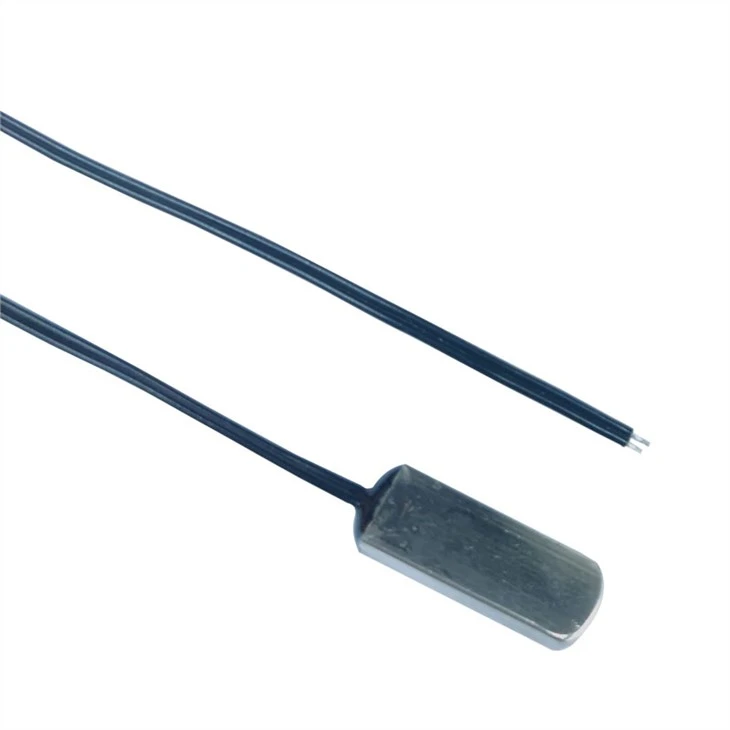
As a temperature sensor supplier, we offer a wide range of high - quality wireless temperature sensors to meet the diverse needs of our customers. Our product portfolio includes Temp Sensor For EV, which is specifically designed for electric vehicles to monitor the temperature of batteries and other critical components. We also offer the Square Straight Tube Probe NTC Temperature Sensor, which is suitable for industrial applications where accurate temperature measurement is required. In addition, our Injected Tube 100k / 10k Screw M6 Ntc Thermistor Probe 50k 3950K 3977K provides reliable temperature sensing in a variety of environments.
Contact Us for Procurement
If you are interested in our wireless temperature sensors or have any questions about their operation and applications, we encourage you to contact us for procurement and further discussion. Our team of experts is ready to assist you in selecting the right temperature sensors for your specific needs.
References
- "Temperature Sensors: Principles, Characteristics, and Applications" by R. P. Sheingold
- "Wireless Sensor Networks: A Comprehensive Survey" by I. F. Akyildiz, W. Su, Y. Sankarasubramaniam, and E. Cayirci


