As a supplier of Fire Alarm Thermistors, I've witnessed firsthand the critical role these components play in ensuring fire safety. One of the most important yet often misunderstood phenomena associated with these thermistors is the self - heating effect. In this blog post, I'll delve into what the self - heating effect of a fire alarm thermistor is, its implications, and how it relates to the overall performance of fire alarm systems.
Understanding the Basics of a Fire Alarm Thermistor
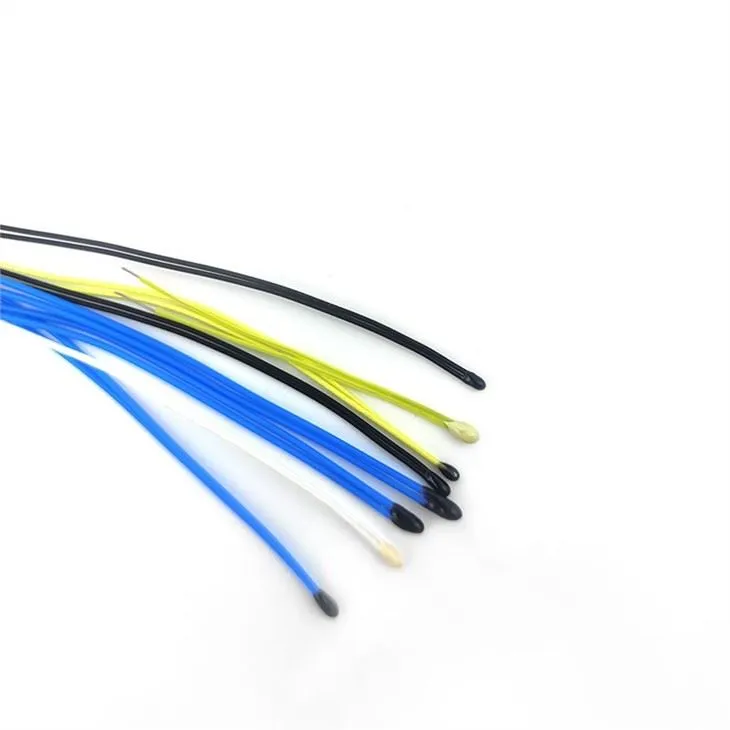
Before we explore the self - heating effect, let's briefly understand what a fire alarm thermistor is. A thermistor is a type of resistor whose resistance changes significantly with temperature. In the context of fire alarms, thermistors are used as temperature sensors. When a fire breaks out, the surrounding temperature rises, and the thermistor's resistance changes accordingly. This change in resistance is detected by the fire alarm system, which then triggers an alarm.
Fire alarm thermistors are typically Negative Temperature Coefficient (NTC) thermistors. This means that as the temperature increases, their resistance decreases. NTC thermistors are highly sensitive to temperature changes, making them ideal for fire detection applications. For more information on NTC thermistors, you can visit our page on NTC Thermistor For Batteries.
What is the Self - Heating Effect?
The self - heating effect occurs when an electric current passes through a thermistor. According to Joule's law, when a current (I) flows through a resistor (R), power (P) is dissipated in the form of heat, and the power can be calculated using the formula (P = I^{2}R). In the case of a thermistor, this dissipated heat causes the temperature of the thermistor itself to rise above the ambient temperature.
This self - heating can lead to a change in the thermistor's resistance, even if the ambient temperature remains constant. For example, if a fire alarm thermistor is connected to a circuit with a certain current flowing through it, the thermistor will heat up due to the power dissipation. As a result, its resistance will change according to its NTC characteristic, even though there is no actual change in the surrounding temperature caused by a fire.
Factors Affecting the Self - Heating Effect
Several factors can influence the self - heating effect of a fire alarm thermistor:
1. Current Flow
The magnitude of the current passing through the thermistor is a crucial factor. As mentioned earlier, the power dissipated (and thus the self - heating) is proportional to the square of the current ((P = I^{2}R)). A higher current will result in more power dissipation and greater self - heating. Therefore, it is essential to carefully control the current in the circuit to minimize the self - heating effect.
2. Resistance of the Thermistor
The resistance of the thermistor also plays a role. A thermistor with a higher resistance will dissipate more power for a given current, leading to more self - heating. However, the resistance of an NTC thermistor changes with temperature, so the self - heating effect can create a feedback loop. As the thermistor heats up, its resistance decreases, which in turn affects the power dissipation and further changes the temperature.
3. Thermal Conductivity of the Surrounding Medium
The ability of the surrounding medium (such as air or the material in which the thermistor is embedded) to conduct heat away from the thermistor is important. If the thermal conductivity is high, the heat generated by self - heating can be dissipated more quickly, reducing the temperature rise of the thermistor. On the other hand, a low - thermal - conductivity medium will trap the heat, exacerbating the self - heating effect.
Implications of the Self - Heating Effect in Fire Alarm Systems
The self - heating effect can have several implications for fire alarm systems:
1. False Alarms
One of the most significant problems is the potential for false alarms. If the self - heating of the thermistor causes its resistance to change enough to trigger the alarm circuit, the fire alarm may go off even when there is no actual fire. This can lead to unnecessary evacuations, disruption, and a loss of trust in the fire alarm system.
2. Inaccurate Temperature Measurement
The self - heating effect can also lead to inaccurate temperature measurements. Since the thermistor's resistance is affected by both the ambient temperature and the self - heating, it becomes difficult to determine the true ambient temperature accurately. This can compromise the effectiveness of the fire alarm system in detecting real fires.

3. Reduced Lifespan
Excessive self - heating can also reduce the lifespan of the thermistor. High temperatures can cause physical and chemical changes in the thermistor material, leading to degradation over time. This can result in a decrease in the thermistor's sensitivity and reliability, ultimately affecting the performance of the fire alarm system.
Mitigating the Self - Heating Effect
To ensure the reliable operation of fire alarm systems, it is necessary to mitigate the self - heating effect. Here are some strategies:
1. Current Limiting
As mentioned earlier, controlling the current flowing through the thermistor is crucial. By using appropriate resistors or current - limiting circuits, the current can be kept at a level that minimizes self - heating while still allowing the thermistor to function effectively.
2. Thermal Design
Proper thermal design can help dissipate the heat generated by self - heating. This can include using heat sinks, choosing materials with high thermal conductivity, and ensuring adequate ventilation around the thermistor.
3. Calibration
Regular calibration of the fire alarm system can help account for the self - heating effect. By calibrating the system under different operating conditions, the effects of self - heating can be compensated for, improving the accuracy of temperature measurements and reducing the risk of false alarms.
Our Fire Alarm Thermistor Products
At our company, we offer high - quality Fire Alarm Thermistor Temperature Sensor that are designed to minimize the self - heating effect. Our thermistors are carefully engineered with advanced materials and manufacturing processes to ensure accurate temperature sensing and reliable performance.
In addition to fire alarm thermistors, we also provide Miniature Medical Temperature Sensor for various medical applications. Our products are known for their high sensitivity, stability, and long lifespan.
Conclusion
The self - heating effect of a fire alarm thermistor is a complex phenomenon that can have significant implications for the performance of fire alarm systems. Understanding the factors that affect self - heating and implementing appropriate mitigation strategies are essential for ensuring the reliable operation of these systems.
If you are in the market for high - quality fire alarm thermistors or other temperature sensors, we invite you to contact us for procurement and further discussions. Our team of experts is ready to assist you in finding the right solutions for your specific needs.
References
- "Thermistors: Theory and Applications" by John M. Zemon.
- "Fire Alarm Systems Design and Installation" by Paul A. Shipp.