

What is the sensitivity of a temperature sensor? Well, let me break it down for you. As a temperature sensor supplier, I've dealt with all sorts of sensors day in and day out, and I know how crucial sensitivity is.
First off, sensitivity in a temperature sensor refers to how well it can detect even the tiniest changes in temperature. Think of it like a super - sharp ear that can pick up the faintest of sounds. A highly sensitive temperature sensor can detect a very small change in temperature and convert it into an electrical signal that we can measure.
Let's say you're using a temperature sensor in a medical setting. You need it to be super sensitive because even a slight change in body temperature can indicate a big difference in a patient's health. That's where our Disposable Medical Temp Probe comes in. It's designed to be extremely sensitive, so it can accurately measure a person's body temperature, even the slightest fluctuations. This is really important in hospitals or clinics, where doctors rely on accurate temperature readings to make diagnoses.
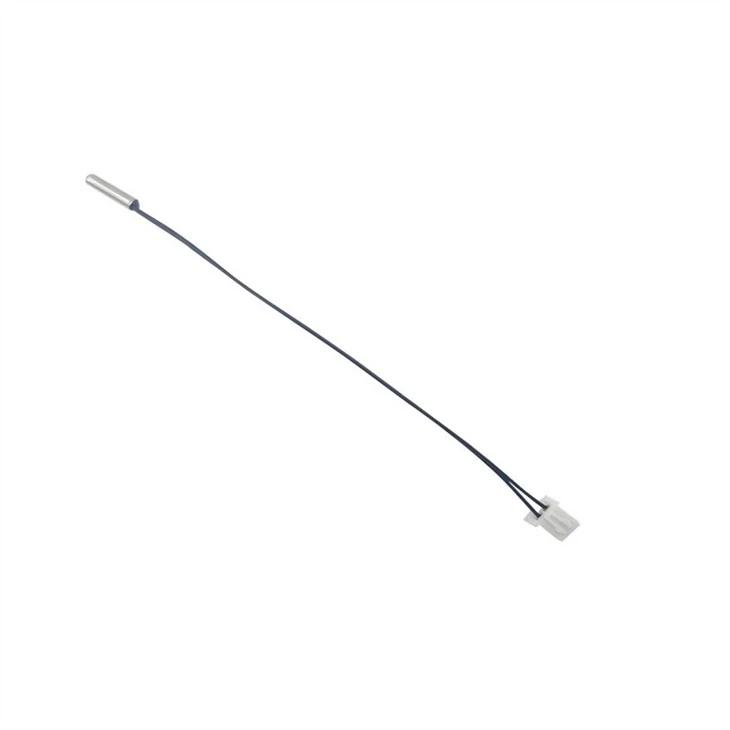
On the other hand, in an industrial environment, the requirements for sensitivity can be different. For example, in a manufacturing process where you're dealing with high - temperature materials, you might need a sensor that can handle a wide range of temperatures but still be sensitive enough to detect small changes that could affect the quality of the product. Our Cylindrical Housing Temperature Probe is a great option for such applications. It's built tough to withstand harsh industrial conditions, yet it can still pick up on those subtle temperature changes.
Now, how is sensitivity measured? Usually, it's expressed as the change in the sensor's output signal per unit change in temperature. For instance, if a sensor has a sensitivity of 10 mV/°C, it means that for every one - degree Celsius change in temperature, the output voltage of the sensor will change by 10 millivolts. This measurement helps engineers and technicians understand how the sensor will perform in different situations.
Another type of temperature sensor that's known for its sensitivity is the NTC thermistor. NTC stands for Negative Temperature Coefficient, which means that as the temperature increases, the resistance of the thermistor decreases. Our NTC Thermistor Temp Sensor is a prime example. It's highly sensitive and can provide very accurate temperature measurements. The reason it's so sensitive is that the resistance of the NTC thermistor changes quite a bit with even a small change in temperature. This makes it ideal for applications where you need precise temperature control, like in climate - control systems or in some electronic devices.
But sensitivity isn't the only thing that matters. You also have to consider other factors like accuracy, response time, and stability. Accuracy refers to how close the sensor's reading is to the actual temperature. A sensitive sensor might detect small changes, but if it's not accurate, those readings won't be very useful. Response time is how quickly the sensor can react to a change in temperature. In some applications, like in a fast - paced industrial process, you need a sensor with a short response time so that you can make adjustments quickly. And stability is about how well the sensor maintains its performance over time. A sensor that's sensitive but loses its accuracy or responsiveness after a short period isn't going to be very reliable.
When choosing a temperature sensor, you have to balance all these factors based on your specific needs. If you're in the medical field, you might prioritize sensitivity and accuracy above all else. In an industrial setting, you might also need to consider the sensor's durability and its ability to work in harsh environments.
As a temperature sensor supplier, we understand that every customer has different requirements. That's why we offer a wide range of temperature sensors, each designed to meet specific needs. Whether you need a highly sensitive sensor for a delicate application or a rugged sensor for an industrial setting, we've got you covered.
If you're in the market for a temperature sensor, we'd love to have a chat with you. We can help you figure out which sensor is the best fit for your project. Just reach out to us, and we'll start the conversation about how we can provide you with the right temperature - sensing solution. Don't hesitate to get in touch and let's work together to find the perfect temperature sensor for your needs.
References

- Fundamentals of Temperature Measurement, National Institute of Standards and Technology
- Temperature Sensors: Principles, Characteristics, and Applications, IEEE Press


