

Hey there! As a supplier of Teflon thermistors, I often get asked about the tolerance of these nifty little devices. So, I thought I'd sit down and write up a blog post to explain exactly what the tolerance of a Teflon thermistor is, why it matters, and how it impacts your projects.
First off, let's start with the basics. A thermistor is a type of resistor whose resistance changes with temperature. Teflon thermistors, specifically, are coated with Teflon (also known as PTFE - polytetrafluoroethylene), which gives them some great properties like high chemical resistance, low friction, and excellent thermal stability.
Now, tolerance in the context of a thermistor refers to the allowable deviation from the specified resistance value at a given temperature. For example, if a Teflon thermistor is specified to have a resistance of 10,000 ohms at 25°C with a tolerance of ±1%, it means that the actual resistance of the thermistor at 25°C could be anywhere between 9,900 ohms and 10,100 ohms.
Why does tolerance matter? Well, it's all about accuracy. In applications where precise temperature measurements are crucial, like in medical devices, aerospace systems, or high - end industrial equipment, a small deviation in resistance can lead to significant errors in temperature readings. Let's say you're building a medical thermometer. If the thermistor's resistance is off by even a small amount, it could give an inaccurate temperature reading, which could have serious consequences for patient care.
On the other hand, in less critical applications like Home Appliance Epoxy NTC Thermistor, a wider tolerance might be acceptable. For instance, in a home thermostat, a small error in temperature measurement might not be a big deal as long as the overall system can still maintain a reasonably comfortable temperature in the house.
There are different levels of tolerance available for Teflon thermistors. Common tolerance values include ±0.1%, ±0.25%, ±0.5%, ±1%, and ±2%. The tighter the tolerance, the more precise the thermistor is, but also the more expensive it tends to be. This is because achieving a tighter tolerance requires more precise manufacturing processes and more rigorous testing.
When you're choosing a Teflon thermistor for your project, you need to balance the need for accuracy with the cost. If your application requires high - precision temperature measurements, you'll probably want to go for a thermistor with a tight tolerance, even if it costs a bit more. But if cost is a major concern and a small amount of error is acceptable, a wider tolerance thermistor might be the way to go.
Another factor that can affect the tolerance of a Teflon thermistor is temperature. The tolerance specified by the manufacturer is usually at a specific reference temperature, typically 25°C. As the temperature changes, the actual resistance of the thermistor will change according to its temperature coefficient of resistance (TCR). And the tolerance can also vary with temperature. So, in applications where the temperature can vary widely, you need to take this into account.
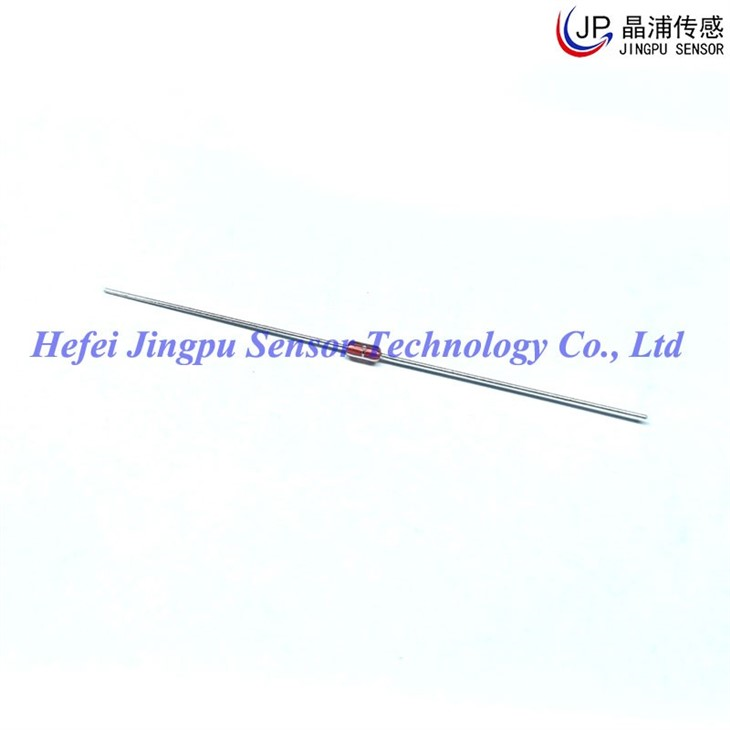

Let's talk a bit about how tolerance is measured. Manufacturers use specialized equipment to measure the resistance of thermistors at the reference temperature. They then compare the measured value with the specified value to determine if it falls within the tolerance range. This testing is done during the manufacturing process to ensure that only thermistors that meet the specified tolerance are shipped to customers.
Now, I want to mention some of the products we offer as a Teflon thermistor supplier. We have PTFE Cable Temperature Sensor, which are great for applications where you need to measure temperature in harsh environments. These sensors are designed to be durable and reliable, and we offer them with different tolerance levels to suit your needs.
We also have 50KΩ 3950k Epoxy Coated NTC Thermistor. These thermistors are popular in a wide range of applications, from consumer electronics to industrial control systems. They are known for their stability and accuracy, and again, we can provide them with different tolerance options.
If you're in the market for Teflon thermistors, whether it's for a small DIY project or a large - scale industrial application, we're here to help. We understand that every project has different requirements when it comes to tolerance, temperature range, and other factors. Our team of experts can work with you to find the right thermistor for your specific needs.
So, if you're interested in learning more about our Teflon thermistors or want to discuss your project requirements, don't hesitate to reach out. We're always happy to have a chat and see how we can assist you in getting the best thermistors for your applications. Whether you need a high - precision thermistor for a critical project or a cost - effective option for a less demanding application, we've got you covered.
In conclusion, the tolerance of a Teflon thermistor is an important parameter that determines its accuracy. Understanding how tolerance works and how it impacts your project is crucial for making the right choice when selecting a thermistor. And as a trusted supplier, we're committed to providing you with high - quality Teflon thermistors that meet your specific needs.
References
- "Thermistor Handbook" - A comprehensive guide on thermistors and their applications.
- Industry standards and specifications related to thermistors.


