


Thin Film Type NTC Thermistor
What is Thin Film Type NTC Thermistor
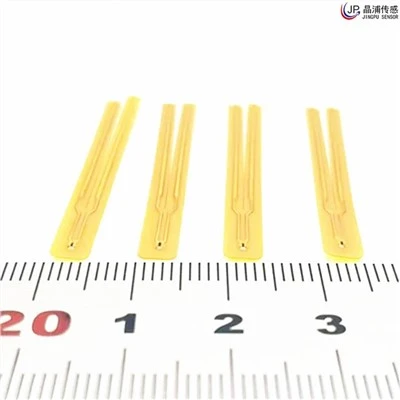
Thin film type NTC thermistors are thinner and smaller in volume than other thermistors, resulting in a smaller thermal capacity of the thermistor, enabling high-speed temperature measurement in confined spaces where installation and measurement were previously impossible.
Benefits of Thin Film Type NTC Thermistor
High Sensitivity: Thin film type NTC thermistors exhibit high sensitivity to temperature changes, making them ideal for precise temperature measurement and control in various applications.
Wide Temperature Range: They operate across a wide temperature range, from cryogenic temperatures to several hundred degrees Celsius, allowing versatility in different environments.
Fast Response Time: Thin film type NTC thermistors respond rapidly to temperature changes, enabling quick and accurate temperature sensing and control in dynamic systems.
Compact Size: Thin film type NTC thermistors are available in small, compact sizes, making them suitable for integration into space-constrained electronic devices and systems.
-
![Polyimide Thin Film NTC Thermistor Temperature Sensor]() Polyimide Thin Film NTC Thermistor Temperature SensorRead More
Polyimide Thin Film NTC Thermistor Temperature SensorRead MoreProduct Name: Polyimide Thin Film NTC Thermistor Temperature Sensor. Application: Temperature measurement. Resistance Value: R25℃=10 kΩ±0.5%. Beta Value: B25/50=3380K
-
![Fast Response Speed Thin Film Type Ntc Thermistor Sensor Assembly]() Fast Response Speed Thin Film Type Ntc Thermistor Sensor ...Read More
Fast Response Speed Thin Film Type Ntc Thermistor Sensor ...Read MoreThe item is one Fast Response Speed Thin Film Type Ntc Thermistor Sensor Assembly. It's used for temperature measurement. Small volume.
-
![Thin Film Thermistor MF5A-6 B3435 10K Temp Sensor Insulated Thermal Resistor For Battery Pack]() Thin Film Thermistor MF5A-6 B3435 10K Temp Sensor Insulat...Read More
Thin Film Thermistor MF5A-6 B3435 10K Temp Sensor Insulat...Read MoreThe item is one Thin Film Thermistor MF5A-6 B3435 10K Temp Sensor Insulated Thermal Resistor for Battery Pack.It's used for temperature measurement, with high accuracy.Temperature sensing is one of
-
![Thin Film Thermistors -40 To 120℃ MF5A-6 Film B3435 Thermistors With 0.15mm Thickness Insulated]() Thin Film Thermistors -40 To 120℃ MF5A-6 Film B3435 Therm...Read More
Thin Film Thermistors -40 To 120℃ MF5A-6 Film B3435 Therm...Read MoreThin Film Thermistors -40 to 120℃ MF5A-6 Film B3435 Thermistors with 0.15mm Thickness Insulated, it is made of NTC element, film, phorphos bracket. Its operating tempeature range -40℃~125℃.It's used
-
![10K 3435 Welding Machine Temperature Sensor]() 10K 3435 Welding Machine Temperature SensorRead More
10K 3435 Welding Machine Temperature SensorRead MoreResistance Value: R25℃=10KΩ. Beta Value: B25/50=3435K. 10K 3435 Welding Machine Temperature Sensor
-
![Home Appliance Thin Film NTC Thermistor]() Home Appliance Thin Film NTC ThermistorRead More
Home Appliance Thin Film NTC ThermistorRead MoreResistance Vlaue: R25℃=100KΩ. Beta Value: B25/50=3950k. This product is a kind of ntc thermistor which is used for the temperature monitoring of home appliances.
-
![10KΩ 3977K Thin Film NTC Thermistor]() 10KΩ 3977K Thin Film NTC ThermistorRead More
10KΩ 3977K Thin Film NTC ThermistorRead MoreResistance Value: R25℃=10KΩ±1%. Beta Value:B25/85=3977K±1%. Application:Computer, printer, Battery pack. 10KΩ 3977K Thin Film NTC Thermistor
-
![100Kohm Thin Film NTC Thermistor]() 100Kohm Thin Film NTC ThermistorRead More
100Kohm Thin Film NTC ThermistorRead MoreResistance Value: R25℃=100KΩ. Beta Value: B25/50=4200K. 100Kohm Thin Film NTC Thermistor
-
![Thin Film NTC Printer Temperature Sensor]() Thin Film NTC Printer Temperature SensorRead More
Thin Film NTC Printer Temperature SensorRead MoreResistance Value: R25℃=10kΩ±1%. Beta Value: B25/85=3977k±1%. Film width: 4.5mm,Total length: 25mm. Thin Film NTC Printer Temperature Sensoris an NTC thermistor which is made of polyimide thin film
-
![Thin Film Computer Temperature Sensor]() Thin Film Computer Temperature SensorRead More
Thin Film Computer Temperature SensorRead MoreThin Film Computer Temperature Sensor is an NTC temperature sensor, which is commonly used for computer,battery pack, computer, firefighting system.
-
![Battery Pack Thin Film NTC Thermistor]() Battery Pack Thin Film NTC ThermistorRead More
Battery Pack Thin Film NTC ThermistorRead MoreResistance Value: R25℃=10kΩ±1%. Beta Value: B25/85=3977k±1%. Thin film ntc thermistor is an NTC temperature sensor, which is widely applied for the temperature measurement of firefighting system,
-
![PI Film NTC Thermistor]() PI Film NTC ThermistorRead More
PI Film NTC ThermistorRead MorePI Film NTC Thermistor is a 10 Kohm 3435K NTC thermistor, which can be used for home appliances, battery pack, computer, and printer.Resistance value: R25℃=10KohmBeta value: 3435K


Why Choose us
Quality assurance
We prioritize delivering high-quality services, and our output is subjected to quality checks to ensure that our clients receive the best possible services.
Customer support
Our customer support team is available round the clock to address any concerns or queries that customers may have.
Quality services
We offer top-quality products or services to our clients and are committed to delivering beyond their expectations.
Experience
We have a team of highly experienced professionals who offer expert advice and services to help you achieve your goals.
How Thin Film Type NTC Thermistors and RTDs Differ


Thin film type NTC thermistors
Thin film type NTC thermistors are thermally sensitive resistors that exhibit a negative temperature coefficient of resistance by decreasing in resistance as temperature increases (Figure 1). This non-linear relationship between resistance and temperature can be beneficial when accurate temperature measurement is needed within a relatively narrow range of temperatures, say within a window of 50°C. The nearly exponential change in resistance value for every degree centigrade in temperature change allows temperature to be measured with little error.
NTCs are made of ceramic metal-oxide semiconducting materials that vary in resistance versus temperature characteristic based on the specific materials used in their formulation mix. They can also come in various shapes and form factors and can be used in a wide variety of applications. Since they are a type of variable resistor, their signal is a resistance value, which is an analog value. NTCs are often used in an analog measuring circuit where the resistance change can be linearized by the use of a voltage divider and operational amplifier circuit. The measured resistance value is converted to a temperature reading by either looking up the value in the thermistor's published resistance versus temperature table or by calculating the temperature using an approximation equation.
When determining the best type of thin film type NTC thermistor to use for measurement accuracy, a designer must be familiar with the types of thermistor calibrations available. Thin film type NTC thermistors might be point-matched, where they are calibrated with a resistance tolerance at a single temperature (typically 25°C) or a few discrete temperature points. Point-matched NTCs with resistance tolerance of 1 percent, 3 percent, 5 percent, and 10 percent at 25°C are commonly available in the market. Alternatively, NTCs can be interchangeable, where they are calibrated to maintain a window of temperature accuracy (for example, ±0.1°C) within a range of operating temperatures. Interchangeable thin film type NTC thermistors are designed for use where they can be replaced with a thermistor from another manufacturer without the need to re-calibrate the measuring circuit. NTCs with temperature accuracy of ±0.1°C and ±0.2°C are commonly available in the market and are economical solutions for temperature measurement.
Resistance Temperature Detectors (RTDs)
RTDs are thermally sensitive resistors similar to thin film type NTC thermistors. However, unlike NTCs thermistors, RTDs exhibit a positive temperature coefficient of resistance—that is, they increase in resistance as temperature increases (Figure 2). The resistance versus temperature relationship for an RTD is nearly linear for a wide range of temperatures. This linear response can be beneficial when it comes to ease of converting a resistance reading into a temperature value. This characteristic also makes RTDs more suitable for use in applications where measurements are made over a wide range of operating temperatures (for example, over a range of -50°C to +500°C.
Unlike thin film type NTC thermistors, RTDs are made of precious metals that are either formed into a wire-wound resistor or deposited onto a substrate using a thin-film process. Most RTD devices use nickel or platinum as the sensing element, as these metals exhibit a very well-defined temperature coefficient of resistance over a wide range of temperatures.
Much like NTCs, RTDs are also used in analog measuring circuits to convert a resistance reading into a temperature reading. Often, RTDs are grouped with other resistors in a bridge configuration to allow a more accurate reading and to minimize error in resistance readings. For thermometers or temperature sensor assemblies containing RTDs, it is common to include additional wire leads to form a 3-wire or 4-wire configuration enabling resistance of the sensor's wire leads to be removed from the measurement to get an even more accurate temperature reading from the RTD sensing element itself.
RTDs come in various accuracy classes, which are defined by various international standards. Platinum RTDs have accuracy classes defined by the standard IEC 60751. For thin-film platinum RTDs, the accuracy classes are defined as F 0.1, F 0.15, F 0.3, and F 0.6, where the number represents the temperature accuracy in ±°C at 0°C. For each of these accuracy classes, the temperature accuracy widens linearly as temperature increases or decreases away from 0°C. The temperature range in which each RTD maintains its accuracy varies by class, so it's important to know over which range of temperatures the desired accuracy is required.

Digital Thermostats – Modern thermostats require high-levels of efficiency for monitoring temperature.
Lower-Temperature Thermometers – Thin film type NTC thermistors work exceptionally well in freezing temperatures. You will find these devices in freezers and other sub-zero devices.
In-Rush Protection – Thin film type NTC thermistors are often used in limiting a device's supply to power circuits. Limiting in-rush currents is an essential component of building electronic equipment and circuits. The thin film type NTC thermistor presents a high initial resistance that prevents large currents from flowing when devices are switched-on. As the limiter heats up, the resistance is lowered, and a higher current flow rate begins. It is important to keep in mind that in-rush limiting thin film type NTC thermistors are often double in size than temperature sensing variants.
Battery Pack Protection – Thin film type NTC thermistors are frequently used to monitor battery pack temperature (while charging). When electronics begin to overheat, they can break and catch fire. Li-ion batteries, which power most phones, are very sensitive to overcharging, and so thin film type NTC thermistors are used to protect you and your device.
Types of Thin Film Type NTC Thermistor
Bead Type NTC Thermistors
These are the most common thin film type NTC thermistors, consisting of a minor, bead-like component typically made of a ceramic material with added metallic oxides. They are compact, durable, and offer precise temperature measurements.
Application: Bead-type NTC thermistors are widely used in temperature sensors for electronic devices, battery packs, medical equipment, and home appliances.
Chip Type NTC Thermistors
Chip NTC thermistors are designed for surface mounting on circuit boards. They come in a flat, rectangular shape, making them suitable for limited-space applications. Chip thermistors are widely used in electronics and automotive industries.
Application: Chip NTC thermistors are commonly used for temperature compensation in integrated circuits, battery management systems, temperature-controlled switches, and automotive engine control units.
Glass Encapsulated NTC Thermistors
These thermistors are encapsulated within a glass shell, providing excellent stability and protection against environmental factors such as moisture and chemical exposure. They are commonly used in harsh environments or applications requiring high reliability.
Application: Glass-encapsulated NTC thermistors find applications in temperature measurement and control in industrial processes, automotive under-the-hood sensing, HVAC systems, and medical devices.
Probe Type NTC Thermistors
Probe thermistors feature a cylindrical or rod-shaped design with a metal housing at one end and the sensing element at the other. They are ideal for temperature sensing in liquids, gases, or surfaces requiring direct contact.
Application: Probe-type NTC thermistors are used in food processing equipment, HVAC systems, automotive coolant temperature sensing, environmental monitoring, and laboratory equipment.
Surface Mount NTC Thermistors
Surface mount thermistors are designed for automated assembly onto circuit boards using reflow soldering techniques. They offer convenience in manufacturing processes and are commonly used in consumer electronics and industrial applications.
Application: Surface mount NTC thermistors are used for temperature monitoring and control in battery chargers, power supplies, LED lighting, consumer electronics, and industrial automation systems.
Ring Lug Type NTC Thermistors
These thermistors feature a ring lug terminal for easy installation and connection. They are commonly used in HVAC (Heating, Ventilation, and Air Conditioning) systems, automotive applications, and industrial equipment for temperature monitoring and control.
Application: Ring lug-type NTC thermistors find applications in temperature sensing and control in water heaters, air conditioners, refrigerators, automotive air intake systems, and industrial machinery.
Three Important Thin Film Type NTC Thermistor Precautions
STORAGE
When storing thin film type NTC thermistors , you need to do so in the original packaging. Before storing, you should not open the package. Store devices in rooms that have a temperature range of 25 °C - +45 °C. The relative humidity should be ≤75% annual mean, but no more than 95%. It is important to keep in mind that dew precipitation is inadmissible. Lastly, always make sure to keep thin film type NTC thermistors away from harmful environments that will negatively affect the thin film type NTC thermistor's long-term operations.
MOUNTING
Never scratch the electrode (before, during, and after the mounting process). When mounting a thin film type NTC thermistor, make sure first to clean the housing and contacts used for assembly. You must be especially keen on getting rid of all oil and grease. Make sure to remove all foreign bodies between the thin film type NTC thermistor and clamp contact because it will affect performance and readings.
OPERATION
All thin film type NTC thermistors are designed to work within a designated temperature range. If you want accurate readings and performance, you need to ensure thin film type NTC thermistors meet the accurate operating range. The same applies to the current and voltage range. Environmental conditions can harm a thin film type NTC thermistor's performance, so make sure to use the devices only in regulated atmospheric conditions.
This is Hefei Jingpu Sensor Technology Co.,Ltd. Jingpu Sensor is a national high-tech enterprise integrating R&D, production and sales of thermistors and temperature sensors. The products include various epoxy-encapsulated and glass-encapsulated thermistors, as well as various temperature sensor assemblies, which are widely used in medical (Eg: Supporting monitors, medical equipment, bacterial incubators, medical refreigerators, etc.), smart wear, Automobile (Eg: Water temperature, oil temperature, air conditioner, filter, intake pressure temperature, steering wheel, rearview mirroe, tire, battery pack, etc.), domestic appliances (Eg: Air conditioner, refrigerator, electric water heater, induction cooker, boiling water boiler, electronic Calendar, etc.), mobile power, fire alarm, meteorology, ocean and other fields.


Certificate
ISO9001:2018 Quality Management System,ISO13485 Certificate, CE certificate, Biocompatibility Test Report


Asked Questions
Hefei Jingpu Sensor Technology Co., Ltd. is one of the most professional thin film type ntc thermistor manufacturers and suppliers in China, specialized in providing high quality customized products. We warmly welcome you to wholesale cheap thin film type ntc thermistor in stock here and get free sample from our factory. For price consultation, contact us.
circuit protection ntc thermistor, ntc thermistor for lcd manufacturing, connector manufacturing ntc thermistor