


Medical Temperature Sensor
What is Medical Temperature Sensor
These medical temperature sensor provide accurate measurements of temperature with a digital output signal and small circuit board package. For example, digital temperature sensors can be designed into medical devices to monitor the temperature of air in respiratory devices to create greater comfort for patients as air enters the airway.
Benefits of Medical Temperature Sensor
● Medical temperature sensors are low-cost, precise, and extremely reliable in repeated experiments.
● They are desirable for both embedded and surface mount applications.
● They have a faster response time because of the lower thermal mass.
● The vibrating wire type is normally full-interchangeable. It means that one indicator can be used for all sensors. It also has a particular technology for verifying long-term stability, simple and fast output.
● They generally have an IP-68 rate by their weather-proof body.
● They have some indicators that are suitable for direct temperature presentation. So, they can be used for remote detecting and data logging.
● Their temperature probes have precise linearity and low hysteresis.
Finally, it should be said that medical temperature sensors are completely airtight. They are fully sealed by electron beam welding with a pure vacuum inside them.
-
![Temperature Monitor Temperature Sensor]() Temperature Monitor Temperature SensorRead More
Temperature Monitor Temperature SensorRead MoreResistance Value: 10Kohm. Beta Value: B25/50=3935K. Tolerance: (25-45℃)±1.2℃. Temperature Monitor
-
![10K NTC Temperature Probe]() 10K NTC Temperature ProbeRead More
10K NTC Temperature ProbeRead MoreThe product is 10K NTC Temperature Probe, which is for the Resistance value R25℃=10kΩ and tolerance
-
![Infant Incubator Temperature Sensor]() Infant Incubator Temperature SensorRead More
Infant Incubator Temperature SensorRead MoreInfant Incubator Temperature Sensor is a kind of medical temperature sensor which is used for
-
![10K Skin Temperature Sensor]() 10K Skin Temperature SensorRead More
10K Skin Temperature SensorRead MoreR25℃=10kΩor R25℃=2.252kΩ. Operating temperature range: 0℃~50℃. Accuracy:±0.1℃(25~45)℃. Length:3
-
![Skin Temperature Sensor]() Skin Temperature SensorRead More
Skin Temperature SensorRead MoreThis product is Disposable Skin Temperature Sensor, which is to measure the temperature of the
-
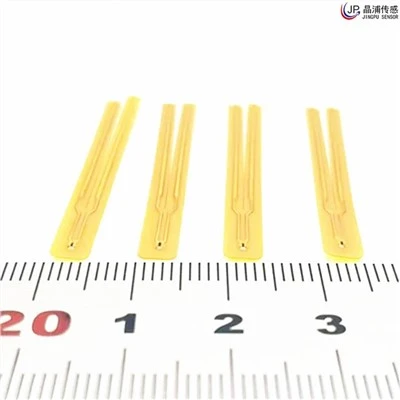
![Thin Film Temperature Sensor]() Thin Film Temperature SensorRead More
Thin Film Temperature SensorRead MoreThin Film NTC Thermistor is usually applied for printers, battery packs, computers, home
-
![Disposable Ear Canal Temperature Sensor]() Disposable Ear Canal Temperature SensorRead More
Disposable Ear Canal Temperature SensorRead More. One time use. The measurement accuracy is high (25~45) ℃±0.1℃. Operating temperature range:
-
![Disposable Skin Temp Sensor]() Disposable Skin Temp SensorRead More
Disposable Skin Temp SensorRead More. Disposable, can only be used once, clean and hygienic. High measurement accuracy (25~45)℃±0.1℃.
-
![Skin Surface Temperature Probe]() Skin Surface Temperature ProbeRead More
Skin Surface Temperature ProbeRead More. Disposable Tolerance(25~45)℃±0.1℃. Operating temperature range: 0℃~50℃. R25℃=2.252kΩ. B25/50=3935k
-
![Disposable Skin Temperature Probe]() Disposable Skin Temperature ProbeRead More
Disposable Skin Temperature ProbeRead More. One time use. The measurement accuracy is high (25~45) ℃±0.1℃. Operating temperature range:
-
![Disposable Medical Temperature Sensor]() Disposable Medical Temperature SensorRead More
Disposable Medical Temperature SensorRead More. One time use. The measurement accuracy is high (25~45) ℃±0.1℃. Operating temperature range
-
![Medical Temperature Probe]() Medical Temperature ProbeRead More
Medical Temperature ProbeRead MoreMedical Temperature Probe is the NTC temperature sensor for the patient's body cavity temperature




Why Choose us
Quality assurance
We prioritize delivering high-quality services, and our output is subjected to quality checks to ensure that our clients receive the best possible services.
Customer support
Our customer support team is available round the clock to address any concerns or queries that customers may have.
Quality services
We offer top-quality products or services to our clients and are committed to delivering beyond their expectations.
Experience
We have a team of highly experienced professionals who offer expert advice and services to help you achieve your goals.
How Medical Temperature Sensors Work
A medical temperature sensor is an instrument that is constructed to sense the condition of coolness or hotness in the target. The fundamental working of this sensor is based on the voltage in its diode. The temperature variation is directly related to the resistance of this diode.
The resistance of the diode is detected and transformed into simple and readable values of temperature such as Fahrenheit, Kelvin, or Centigrade and demonstrated in meaningful formats instead of readout values. These medical temperature sensors are employed to sense the internal temperature of various structures like power plants. Click here to see precisely how is the proportion of diode’s resistance & temperature variations.
The fundamental principle of the medical temperature sensors operation is the voltage modification in the MOSFET terminals. If the voltage reduces, the temperature also decreases, according to the voltage drop between the emitter in the MOSFET and terminals of the base sensor.
In addition, some devices have a type of vibrating wire in the structure of the sensor that operates on the principle of stress variations followed by temperature modifications. The vibrating wire is modeled depending upon the function of different metals. They have various linear coefficients with temperature variation in their expansion.
They fundamentally include a magnetic wire which has high tensile strength. Two sections are set to dissimilar metals that any variation in temperature influences the tension in the wire directly and, therefore, its main frequency of vibration.
In modern and high-tech medical temperature sensors, the basic metal is aluminum because aluminum has a greater coefficient of a thermal effect than steel. As the temperature sign is transformed into frequency, the readout values utilized for other vibrating sensors can also be used to control the temperature.

Applications of Medical Temperature Sensors
Industrial Applications
Medical temperature sensors are utilized to monitor various environments and machinery, power plants, and manufacturing. Medical temperature sensors are used to measure water temperatures in reservoirs and boreholes. They can also be used to interpret temperature-related stress and changes in volume in dams. medical Temperature sensors are also utilized in the study of the temperature effect on other installed instruments.
Scientific and Laboratory applications
Medical temperature sensors are utilized in science and biotech monitoring.
Medical Applications
Medical temperature sensors are utilized in the monitoring of patients, in medical devices, in thermodilution, in humidifiers, gas analysis, cardiac catheters, ventilator flow tubes, and dialysis fluid temperature.
Uses in Motorsports
Medical temperature sensors are used for measuring inlet air temperature, exhaust gas, engine temperature, and oil temperature.
Domestic Appliances
Medical temperature sensors are used in kitchen appliances (ovens, kettles, etc.) and also in white goods.
HVAC Applications
Medical temperature sensors are utilized in air conditioning devices and heating ventilation devices, either domesticated or commercial.
Sensors in Transit
Medical temperature sensors are used in refrigerated vans and trucks.
Measuring Temperatures In Medicine Storage Areas
Air sensors
An medical temperature sensor is a temperature sensor that has been suspended within the air space of a storage area and measures the air temperature.
Refrigerator and freezers
In the event of a high temperature excursion, the air in the fridge or freezer will warm first and this will then begin to warm the medicine. This means there is a short delay between the change in air temperature of the storage area and its impact on the medicine. medical temperature sensors are therefore useful as an early warning indicator, alerting users to a problem shortly before it impacts upon products.
Ambient areas
Rapid, significant changes in ambient temperatures are unlikely. Medical temperature sensors alone are generally suitable for monitoring these areas.
Medical temperature sensors use an electrical signal to measure temperature. Solids, liquids, and gases may all be measured with medical temperature sensors. In a nutshell, although they come in various shapes and sizes, they only monitor the temperature change like a room thermostat.
Medical temperature sensors can detect whether or not a temperature change has happened, but they do not convey a signal regarding the change. That’s when the temperature transmitter comes into the picture.
The temperature transmitter attached to the sensor — sends out a signal when the temperature changes. This allows a technician to inspect the equipment. The temperature transmitter often sends a signal to a system or a monitor that has to read the temperature. That way, if the machine's temperature is off, it can be examined and fixed before it causes difficulties.

Types of Medical Temperature Sensor


Thermostats
A thermostat is a contact type sensor containing a bi-metallic section constructed from two different metals such as aluminum, nickel, tungsten, or copper.
The main principle of thermostats is based on the difference in the linear expansion coefficient of the metals. Therefore, it forces them to generate a mechanical movement due to heat rise.
Thermistors
Thermally sensitive resistors or briefly thermistors are particular sensors because of the modification of their physical appearance due to the change in the temperature. The thermistors are constructed from ceramic substances like oxides of particular metals covered with glass. It will allow them to form simply.
Some thermistors are NTCs and have a negative temperature coefficient. So, they will be introduced as a separate group of sensors in some textbooks. We will discuss them below completely. But there are a lot of thermistors that have a positive temperature coefficient. They are introduced as PTCs, and their resistance increases by increasing the temperature.
Resistive Temperature Detectors
RTDs are medical temperature sensors that are constructed from precise conducting metals like platinum covered in a coil. The electrical resistance of an RTD modifies due to the temperature variations.
Thermocouples
The thermocouple is one of the most popular medical temperature sensors because of its wide temperature range, accuracy, sensitivity, reliability, and simplicity.
A thermocouple generally includes two sections of dissimilar metals, such as constantan and copper, combined by welding. One of these sections, introduces as the Cold junction, has a particular temperature while the other one, introduced as the Hot junction, is for the measuring process.
Negative Temperature Coefficient (NTC) Thermistor
NTC is a particular type of thermistors that basically reacts directly to even a few temperature changes. The Negative Coefficient means that the thermistor presents a great resistance at low temperatures. Therefore, as the temperature increases, the resistance starts to drop immediately.
It can be said that even a small temperature variation can be detected accurately by the negative temperature coefficient thermistors according to the large resistance modification per degree Centigrade in them. Nevertheless, they require linearization because of their exponential operation principle. They normally work between -50 to 250 °C.
Semiconductor-Based Sensors
A semiconductor-based temperature sensor operates with two combined circuits or ICs. They include two similar MOSFETs with high sensitivity. They precisely provide electrical characteristics, including voltage and current, to measure the temperature variations. They approximately send a linear output but are less precise at 1 to 5 °C. They also present the slowest time responses between 5 to 60 s between medical temperature sensors in their temperature range.
How to Choose the Right Medical Temperature Sensor
Temperature Range
Different types of medical temperature sensors are capable of measuring different ranges and might be more accurate within a certain range. It is important to make sure that the range of the temperature sensor is checked, and also the range of your application that is expected before purchasing. The temperature range of the temperature sensor is provided on the datasheet.
Accuracy and Stability
An application may require a certain degree of accuracy; be aware that the variance of thermocouples in long term stability is higher than that of thermistors and RTDs.
Size and Package
The type of temperature sensor selected is determined by the space available within the application. If there is limited space, a smaller device is required. How the temperature sensor will be connected to the application and how the temperature is going to be measured is determined by package style; therefore, package style is an important consideration.
Environmental Conditions
A critical factor in the placement and choice of a medical temperature sensor is the conditions where it will be used. Humidity, vibrations, and other environmental factors radically affect the stability and accuracy of a temperature sensor. In addition, electrical noise affects its readings especially if the temperature changes are minute and small. Attention to the noise level where a temperature sensor is used ensures accurate measurements.
The conditions and environment where a temperature sensor is to be placed has to be closely examined to ensure optimum performance. Aside from the obvious structure of the temperature sensor, any connections, such as lead wires, have to be protected from hostile and unstable environments.
Various measures can be taken to protect a temperature sensor and its wiring from the conditions of the environment such as protective metal sheaths that are resistant to wear and corrosion. The use of sheathing increases the cost of a temperature sensor and affects its sensitivity. Additionally, certain sensor configurations have mounting considerations to ensure a solid thermal connection.
This is Hefei Jingpu Sensor Technology Co.,Ltd. Jingpu Sensor is a national high-tech enterprise integrating R&D, production and sales of thermistors and temperature sensors. The products include various epoxy-encapsulated and glass-encapsulated thermistors, as well as various temperature sensor assemblies, which are widely used in medical (Eg: Supporting monitors, medical equipment, bacterial incubators, medical refreigerators, etc.), smart wear, Automobile (Eg: Water temperature, oil temperature, air conditioner, filter, intake pressure temperature, steering wheel, rearview mirroe, tire, battery pack, etc.), domestic appliances (Eg: Air conditioner, refrigerator, electric water heater, induction cooker, boiling water boiler, electronic Calendar, etc.), mobile power, fire alarm, meteorology, ocean and other fields.


Certificate
ISO9001:2018 Quality Management System,ISO13485 Certificate, CE certificate, Biocompatibility Test Report


Asked Questions
Hefei Jingpu Sensor Technology Co., Ltd. is one of the most professional medical temperature sensor manufacturers and suppliers in China, specialized in providing high quality customized products. We warmly welcome you to wholesale cheap medical temperature sensor in stock here and get free sample from our factory. For price consultation, contact us.
precision medical temperature sensor, reliable medical temperature sensor, Micro NTC Thermistor